


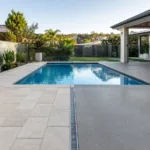
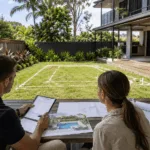
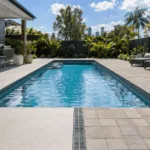

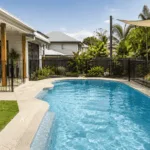
Planning planning poolside gazebos and shade structures in coastal areas where wind exposure and durability need careful attention is an important step for homeowners who want a backyard that feels practical, comfortable, and suited to everyday use. The right decision can influence how the pool area looks, how it functions, and how well it supports outdoor living over time.
For Brisbane and South Brisbane homeowners, poolside gazebos should be considered in the context of the full backyard, not just as a single feature. Climate, access, family needs, maintenance, drainage, and future entertaining plans can all shape the final result. Related search terms such as poolside storage sheds, and poolside shade structures are also part of this topic when they fit naturally.
Complete Creative Constructions works with homeowners planning pool design, fibreglass pool installation, landscaping, poolside structures, and outdoor living construction, so this guide focuses on practical considerations rather than one-size-fits-all advice.
Why This Topic Matters
Coastal QLD sites can be exposed to stronger winds, salt air, storms, and harsh sun.
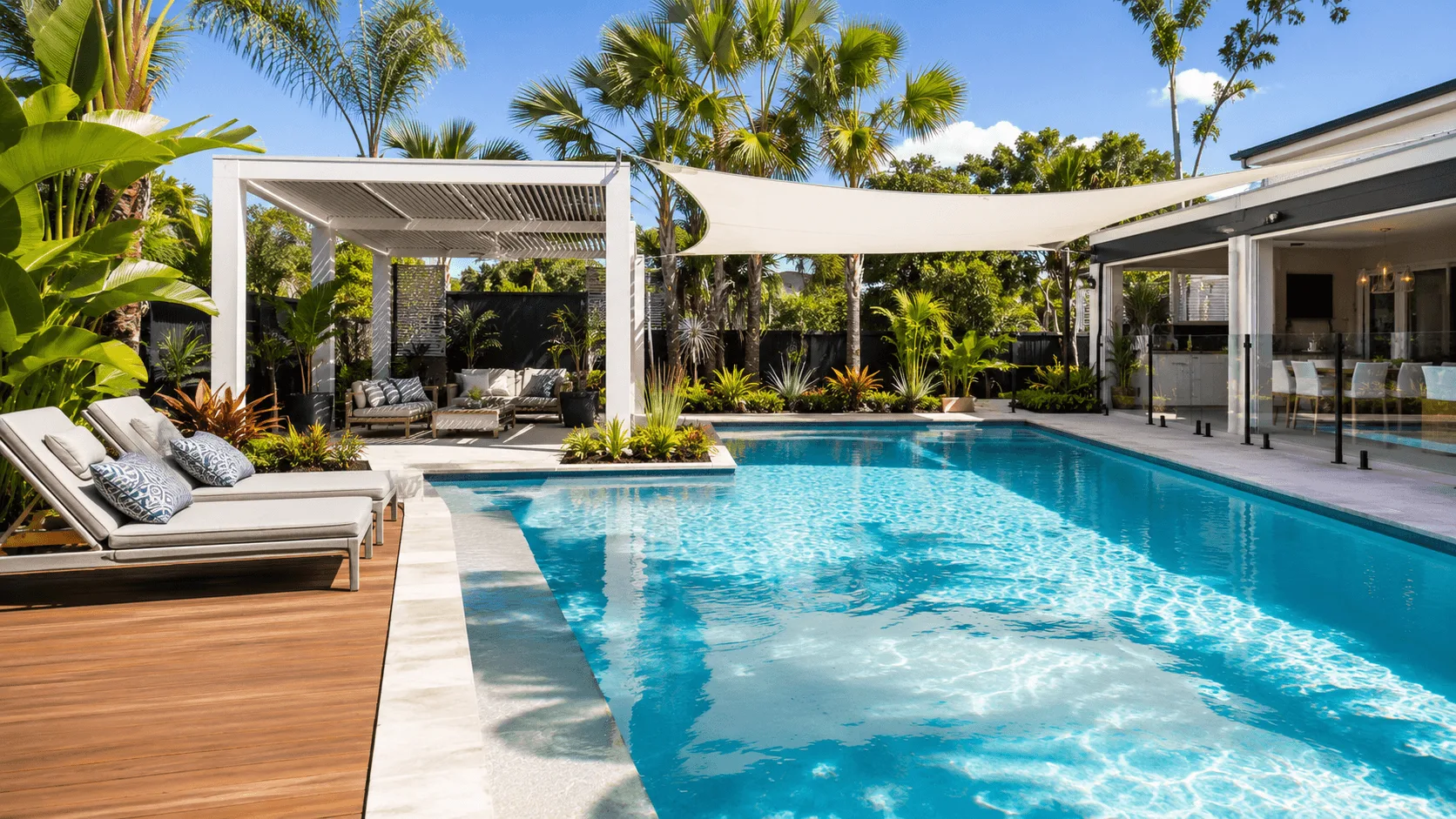
Poolside gazebos and poolside shade structures need to be designed and installed with site conditions, structural requirements, and material durability in mind.
When homeowners make this decision early, it becomes easier to align the pool, landscaping, shade, access, and budget. It also helps avoid choices that look appealing in isolation but are harder to maintain or enjoy in real life.
Main Benefits or Key Points
The main value of planning around poolside gazebos is that it gives the whole outdoor area a clearer purpose. Instead of treating the pool, paving, planting, and shade as separate items, the design can support the way the household actually uses the backyard.
- Improved comfort and shade around exposed pool areas
- Better long-term performance when materials suit coastal conditions
- Reduced risk of choosing lightweight structures that are not suitable for the site
- More informed planning for footings, fixings, roof form, and orientation
- A safer and more practical outdoor living area when professional advice is included
What Readers Should Know
Site conditions and layout
Wind load considerations should be assessed by qualified professionals, especially for fixed structures. Requirements can depend on location, exposure, structure size, height, materials, and anchoring.
Materials, finishes, and usability
Salt air and moisture can affect fixings, coatings, timber, steel, and hardware. Material selection matters in coastal environments.
Professional guidance and sequencing
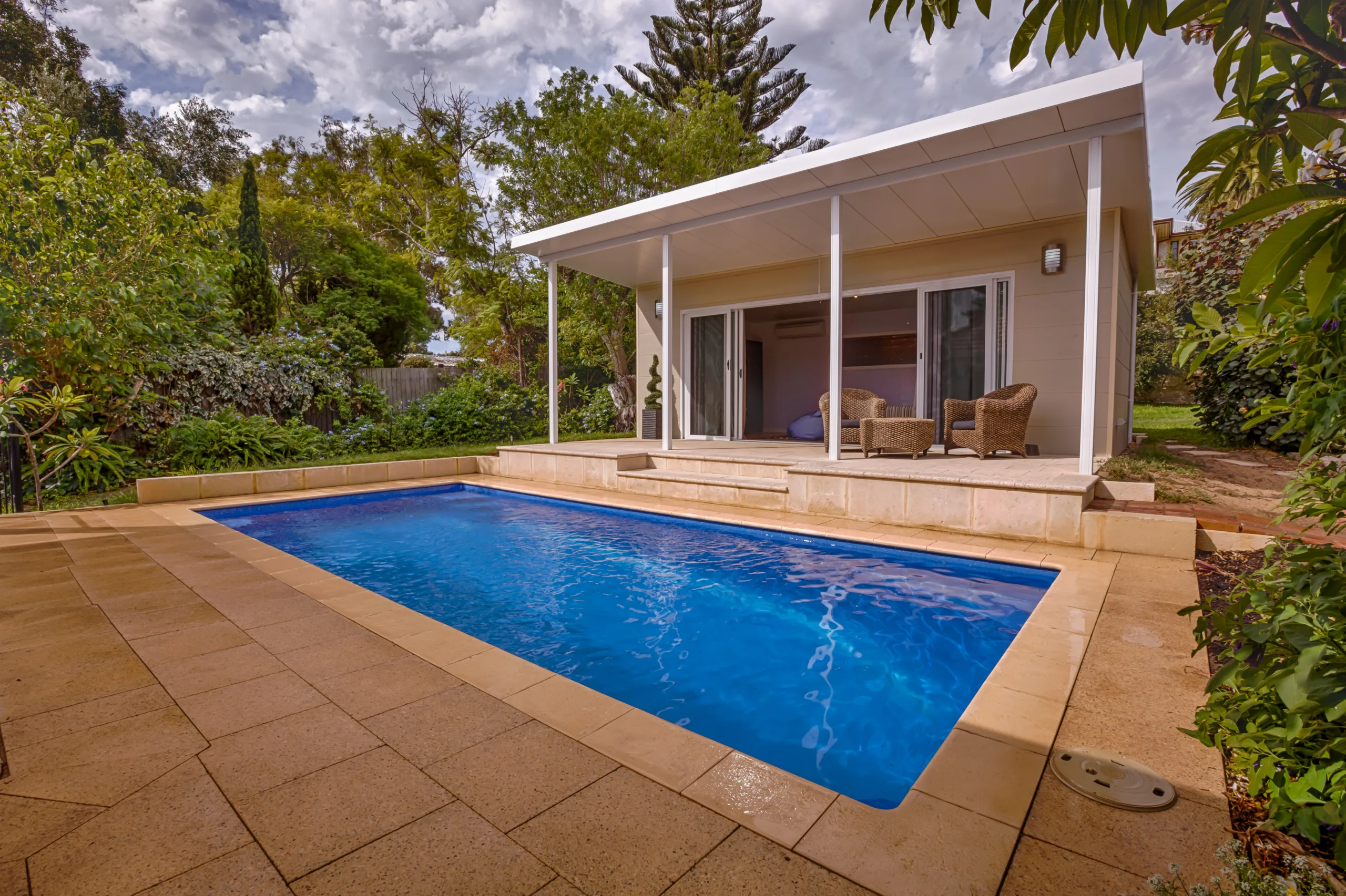
Poolside storage sheds, gazebos, pergolas, and shade structures may have different approval and engineering requirements.
For larger or more detailed projects, it is also worth thinking about staging. Some homeowners may complete the pool first and return later for shade, lighting, planting, or outdoor kitchen elements. Others may prefer a more complete construction program so levels, drainage, electrical planning, and finishes can be coordinated at once.
The right approach depends on budget, access, urgency, and how much disruption the household can manage. A staged project can be practical, but it should still be designed as a complete plan so future works do not require avoidable demolition or rework.
Homeowners should also remember that every site is different. Before relying on general advice, it is sensible to speak with a qualified pool builder, landscaper, engineer, certifier, or local council where the project involves compliance, structural work, drainage, or approvals.
Practical Tips or Things to Consider
Before making final decisions, use the following points as a practical checklist:
- Discuss wind exposure before selecting a gazebo or shade system.
- Use materials, coatings, and fixings suitable for coastal conditions.
- Avoid lightweight products that are not rated for the intended location.
- Keep structures clear of pool barriers and important access paths.
- Ask an engineer, certifier, or qualified builder about footings and anchoring.
Good planning does not need to make the project complicated. It simply helps the final backyard feel more intentional, easier to use, and better suited to the home.
Good planning does not need to make the project complicated. It simply helps the final backyard feel more intentional, easier to use, and better suited to the home.
Local Relevance for Coastal QLD
Coastal QLD homes often need outdoor spaces that can handle strong sun, wind exposure, moisture, and salt air. This makes material selection, fixings, coatings, drainage, and maintenance planning especially important.
Poolside structures and finishes should be assessed against the actual exposure of the site, not just the general suburb or region. A sheltered courtyard and an exposed coastal block can need very different design responses.
Where structures, footings, wind loads, or approvals are involved, homeowners should speak with qualified builders, engineers, certifiers, or local council before committing to the final design.
Frequently Asked Questions
Why do wind loads matter for poolside gazebos?
Wind loads influence how a structure is designed, fixed, and supported. In exposed or coastal areas, professional assessment is especially important.
Are poolside shade structures suitable for Coastal QLD?
They can be, but they should be selected and installed with wind, corrosion, UV exposure, and approvals in mind.
Do I need engineering for a gazebo?
Some fixed structures may need engineering or certification depending on size, location, and exposure. Check before building.
What materials suit coastal pool areas?
Materials should be chosen for corrosion resistance, UV exposure, moisture, and maintenance expectations. Your builder or supplier can recommend suitable options.
Can a poolside storage shed be placed near the pool?
It may be possible, but placement should consider fencing, access, drainage, wind, and compliance requirements.